Global insured losses from natural disasters are expected to continue rising at an annual rate of 5-7% relative to GDP, according to Kera McDonald, Chief Underwriting Officer at Swiss Re Corporate Solutions.
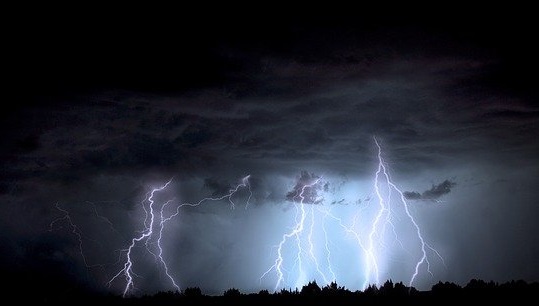 During Swiss Re’s recent media dialogue discussing its latest sigma report, McDonald emphasised the increasing severity of weather events, mainly driven by secondary perils like hail, wildfires, and tornadoes.
She noted that these secondary perils now account for a much larger share of global natural disaster losses than in the past.
McDonald explained, “What we see is that, on an annual basis, the insured losses that are coming on a regular basis to the insurance industry today are over $100 billion.
“And if we can put that into context, in 2017 when we had the hurricanes Harvey, Irma and Maria, that was well above $100 billion, but no one expected that necessarily to be the new norm. Six of the seven years since then, what we’ve seen is at or above $100 billion. This is a step change versus what we had seen in the years before that.”
Looking ahead, McDonald stated that Swiss Re anticipates continued growth in these natural catastrophe events at a rate of 5-7% per year.
“To put that in context, relative to GDP, the natural catastrophe losses in the world have doubled in the last 30 years, but at a 5%-7% growth rate they’re going to double again in the next 10, relative to GDP, and that is a very significant shift that our clients are dealing with,” she added.
The insurance industry faces significant challenges as natural disaster losses grow faster than GDP. This growth impacts insurance affordability and could lead to larger protection gaps in many regions.
Swiss Re expands on this in its sigma report: “In 2023, nearly 62% of total catastrophe losses were uninsured. Narrowing protection gaps requires reducing expected losses and/or increasing insurance coverage. And reducing loss potential involves climate change mitigation, loss reduction, and prevention and adaptation actions to minimise exposure and vulnerability to hazards, both at societal level (eg, enforcing building codes) and at the individual asset level.”