On the back of an impressive year of rate taking and improving terms and conditions (T&Cs), global insurer and reinsurer Everest expects property market conditions to persist well into next year and potentially into 2025, according to Jim Williamson, EVP, Group Chief Operating Officer, and Head of Reinsurance.
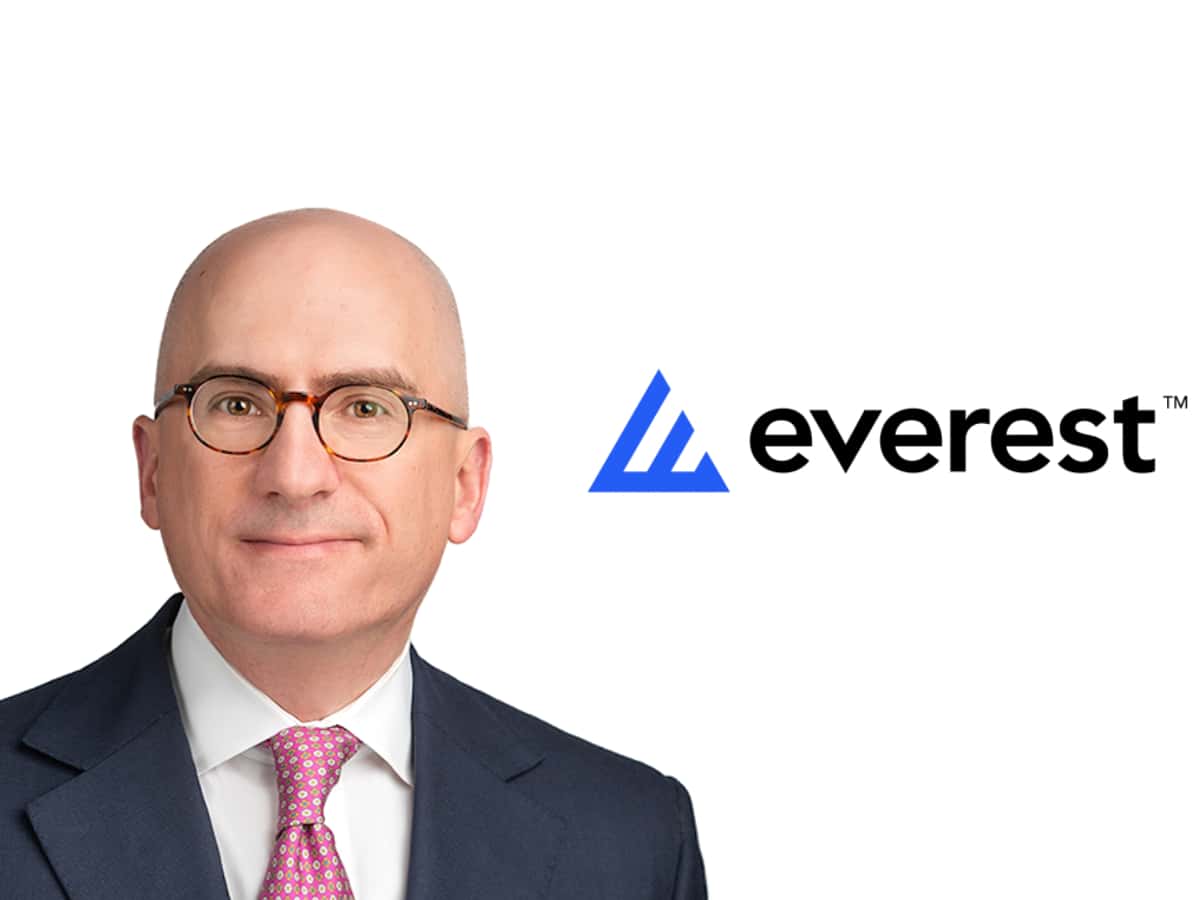 As the reinsurance industry prepares to meet in Monte Carlo for the 65th edition of the Rendez-Vous de Septembre (RVS), we spoke with Everest’s Williamson about the likely focus of negotiations at the event, conditions in the property and casualty markets, and the tightening of T&Cs.
In the property reinsurance market, Williamson noted the “incredible year of rate taking and improving T&Cs” that really started to gain traction at the end of last year.
“1.1 was incredibly dislocated. Everest, I think, was in a pretty enviable position because we had reduced exposures in 2022, so we had dry capacity that we were able to deploy and really seize opportunities at Jan, April, and the mid-year; we were really able to nail those renewals,” said Williamson. “Rate levels at each of those renewals put us in a zone where expected returns are what we saw at 1.1, which is fantastic.”
While 2023 is, for the most part, done and dusted for Everest, negotiations for next year will undoubtedly heat up at RVS, and the re/insurer is pretty bullish about property reinsurance market conditions moving forwards.
“Our expectation on the property front for Jan 1, is that we expect to see continued rate taking, obviously not to the same magnitude that we’ve seen over the last 12-18 months, but we think it’ll be meaningful,” said Williamson.
“We think conditions have the potential to persist well into 2024, and now we’re starting to think maybe even 2025, given all the factors. So, very favourable on that front, and again, we had the dry powder, raised incremental capacity, and we’re deploying that with our core clients,” he added.
In terms of the casualty reinsurance market, Williamson highlighted Everest’s meaningful growth as the company’s ridden the wave of casualty correction over recent years with its clients.
“I think we partner with some of the best underwriters in the industry, and that’s been good for us. Rate taking has slowed, and what we’re watching is to make sure that rate continues to keep up with trend,” he said. “So far, knock wood, we are at that place, it is doing that. But we watch it carefully.”
Williamson also commented on the fact ceding commissions in the casualty space started to recede this year, explaining that this is a trend Everest expects to continue in a modest yet meaningful way.
Ultimately, Everest “still sees legs in that market, even though some of the froth is coming out,” said Williamson.
As emphasised by Williamson, as well as meaningful rate rises, notably in the property catastrophe sector, T&Cs have been a focus for reinsurers throughout 2023, and specifically the move away from frequency events as sellers of protection look to participate higher up the tower.
Whether it’s floods in Europe, record levels of severe convective storms in the U.S., or devastating wildfires in Hawaii and Canada, this year’s spate of natural catastrophe events has shown why reinsurers have shifted away from so called secondary perils.
In light of this, Williamson told Reinsurance News that he expects the focus of negotiations at RVS to be about quality of panel and capacity availability, as he feels the market has now figured out where it needs to be in terms of T&Cs.
“I think the hard work has been done for the most part in 2023. Obviously, there’s exceptions and they’ll be clean up, but I think we’re in a good spot. I don’t see any backsliding on the T&C front. I think we’re staying where we are.
“So, I think it’ll be mostly about, for us anyway, sitting down in a really constructive manner with our core cedents and figuring out how we can maximise capacity deployment to those clients so that they can have the best possible reinsurance panel,” said Williamson.
“I think there’s been a flight to quality that’s occurred in the industry, wherever possible, over really the last few years. I think it got delayed a little bit at 1.1 because people were desperate to just fill out their programmes, and so they were willing to accept maybe a little bit of a backslide on panel quality.
“That’ll benefit Everest because we are a preferred market. I think our clients want to do more with us and we have the resources, particularly given our capital raise, which if I do say so myself was quite well timed, to fill out those panels and help them move away from some partners that maybe they do not want to be on their panel. So, I think it will be very constructive,” he added.
Everest raised almost $1.5 billion ahead of the mid-year 2023 renewals in order to take advantage of the hard market growth opportunity.
In previous hard market cycles, Everest would have been one of a number of firms that undertook a raise to capitalise on the opportunity, but that hasn’t been the case this time around, and raises have been few and far between.
For Everest, however, Williamson explained that the Bermuda-based company “had enough conviction that this market had legs and that we were well enough positioned to successfully complete a deployment, that we had the fortitude to go ahead and do it.
“I think that involves a lot of work with our clients to understand their needs and make sure that they had a need that we could fill and fill it productively and at terrific economics for ourselves. And so, that gave us the conviction we needed to move forward.”